
aBeLOG
Welcome to the aBeLOG, a series of (hopefully!) fortnightly posts on all matters homiletical. I intend to touch on whatever grabs my attention regarding preaching—issues contemporary and ancient, ideas hermeneutical and rhetorical, personalities conservative and liberal, publications antiquarian and avant-garde. Essentially, I’m going to follow my own homiletical olfactory instincts up rabbit trails and after red herrings. Comments are always invited and appreciated.
Mark 8:27–9:13

The hope of future glory encourages disciples amidst present suffering while following Jesus.
“If anyone wishes to follow behind Me,
let him deny himself and take up his cross and follow Me!”
Mark 8:34
Allusions to who Jesus is have permeated the Gospel all along thus far; the crowds have often been amazed at Jesus’ words and deeds, and they have congregated in large numbers before him, but everyone—crowds and disciples—have failed to (fully) grasp the person
Mark 7:31–8:26
God can be trusted for the provision of life’s daily needs.
“Do you still not see or understand?”
Mark 8:17
This text demonstrates the continued lack of discernment on the part of Jesus’ disciples, which had been a constant theme in Act I of Mark (1:1–8:26). This last depiction of the disciples’ obtuseness (8:1–21) is bracketed between two miracles of perception: a deaf and dumb man is healed on one side (7:31–37), and the sight of a blind man is restored
Mark 7:1–30

Faith that produces obedience, not hypocritical allegiance to manmade rules, renders the disciple morally acceptable to God.
“The things which come out of one are the things that defile one.”
Mark 7:15
This pericope primarily deals with an issue of the “heart” (7:6, 19, 21): both purity and impurity begin “inside” (7:21, 23), not “outside” (7:15, 18). Jesus’ concern here is with moral purity—obedience to God’s commands. On the other hand, the Pharisees’
Mark 6:32–56
Disciples commissioned by the divinely powerful Jesus are themselves divinely empowered by him to meet any need.
“You yourselves give them to eat!”
Mark 6:37
The crowds gathered are like “sheep not having a shepherd” (6:34), a proverbial metaphor in the OT, used of Israel in a leadership vacuum (Num 27:17; 1 Kgs 22:17; Ezek 34:5–6). This sets the stage for the leadership role disciples are directed by Jesus to play. But they have apparently given no thought to
Celibacy
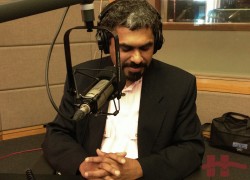
Last week, I was at Moody Bible Institute, to speak at their Annual Pastors’ Conference. It coincided with the release of my new book Privilege the Text: A Theological Hermeneutic for Preaching.
I had been informed earlier that Moody Radio, specifically The Chris Fabry Show—a national affair that runs on several hundred Christian radio stations—wanted to interview me when I was up there. I assumed it was another publicity engagement for the new book.
But I
Mark 6:7–32

Disciples’ commission from Jesus, that attracts the world’s opposition, is enabled by God’s provision.
And He [Jesus] said to them [his disciples],
“Come away by yourselves to a secluded place and rest a while.”
Mark 6:31
This pericope is another Markan “sandwich” (outer story: 6:7–13 and 6:30–32; inner story: 6:14–29).
Jesus and John are strikingly similar in description: both are reported as raised from the dead (6:14; and 16:6–7), both are “arrested”
Mark 5:21–6:6
Jesus’ care, and his power over disease and death, evokes disciples’ fearless, efficacious faith.
“Do not be afraid, only believe.”
Mark 5:36:41
Mark 5:21–24 and 5:35–43 form the two halves of an outer story, with 5:25–34 being the inner story. The stories create a single tapestry. Look at the similarities: both protagonists are in hopeless situations; both fall at Jesus’ feet; both come into physical contact with Jesus; both conditions are ritually impure
 Abe Kuruvilla is the Carl E. Bates Professor of Christian Preaching at The Southern Baptist Theological Seminary (Louisville, KY), and a dermatologist in private practice. His passion is to explore, explain, and exemplify preaching.