
RaMbLeS
Welcome to RaMbLeS, a collection of weekly musings on life and Scripture. It all began in 2005 on Google’s blogspot as the aBeLOG (a name now recycled), a semi-autobiographical devotional that attempted to keep well-wishers abreast of my activities as I relocated to Scotland for a few years. Since my return, I’ve continued my RaMbLeS, and here’s its most recent incarnation on Homiletix, as random reflections usually based on current news articles and travel experiences and whatever else takes my fancy!
Named!

A survey of 2,000 Americans (done online by Talker Research, a market research and PR polling agency) found that 18% (roughly 1 in 5) admit to judging a person based solely on their first name, before any interaction takes place, before a handshake, and before a resume or even a face is scrutinized. Judging a book by its cover.
“Karen” came in first place, drawing far more negative mentions than any other name. “Chad” was a distant second, with “Donald,” “John,”
Choose?
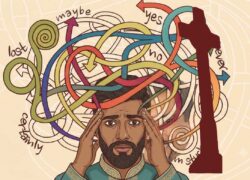
Associated Press recently ran an article on the paradox of choice. Bottom line: Cut the number of choices you make each day. Your brain will thank you!
We demand an abundance of choices so that we can pick the perfect set of clothes, the ideal Netflix show, the best car, the greatest home. Oh, and that heavenly soulmate.
But behavioral scientists say the increasing deluge of choices is melting your mind!
Said Barry Schwartz, emeritus psychology professor at Swarthmore University
Green!

Callum Borchers had an article in The Wall Street Journal (WSJ) the other day: “Why White-Collar Men Are Obsessed with the Perfect Lawn.”
He cited Dave Won, a successful sales consultant:
I get a lot of satisfaction from my hard-earned green. I am referring, of course, to the verdant lawn that I care for like one of my children. I’m competitive. My neighbors have good lawns, but I’m going to try to get a better lawn than them.”
Apparently, these days, for a lot
Snow?

Temps are spiking all over the world in a roasting heatwave.
Reported the New York Times recently:
On a recent Tuesday, the heat index in Frisco, Texas, spiked above 100 degrees. While asphalt bubbled beneath a scorching sun, Katelin Schebler was relaxing on a bench in a room that looked like a stylish meat locker. Swaddled in a robe, mimosa in hand, she was writing in her journal under a gentle snowfall.”
Yup, that’s right: “a gentle snowfall.” In Frisco, Texas!
Schebler,
Mean?

A recent study in Scientific Reports, “Evolution of Moral Expression in Song Lyrics,” from researchers at Queen Mary University, London, and Universitat Pompeu Fabra, Barcelona, claimed pop songs were getting meaner!
They analyzed the lyrics of several hundred thousand English-language songs, comparing two separate datasets, one from 1960 to 2010, and the other from 2011 to 2023. Expressions of immorality—things like harm, cheating, and rule-breaking—have, apparently,
Revenge?

National Public Radio (NPR) revently conducted an interview with attorney, James Kimmel, Jr., lecturer in psychiatry at the Yale School of Medicine, and author of The Science of Revenge.
Maybe a car cuts you off in traffic. Hey, let’s do the same thing to him at the next light. Apparently, we are rewarded by our brains for such revenge!
Kimmel:
Neuroscience has shown that revenge activates the same area of the brain that activates for substance use disorders, for, you know,
Internalization!

One might think, or have heard others exhort, that keeping a stiff upper lip and not bothering others with one’s troubles is a sign of strength and resilience. One would be wrong, according to “Stress Internalization Is a Top Risk for Age-Associated Cognitive Decline among Older Chinese in the U.S.,” published in The Journal of Prevention of Alzheimer’s Disease, by scientists from Rutgers and the Children’s Hospital of Philadelphia.
The study followed 1,528 Chinese


 Abe Kuruvilla is the Carl E. Bates Professor of Christian Preaching at The Southern Baptist Theological Seminary (Louisville, KY), and a dermatologist in private practice. His passion is to explore, explain, and exemplify preaching.