
Hasslers!
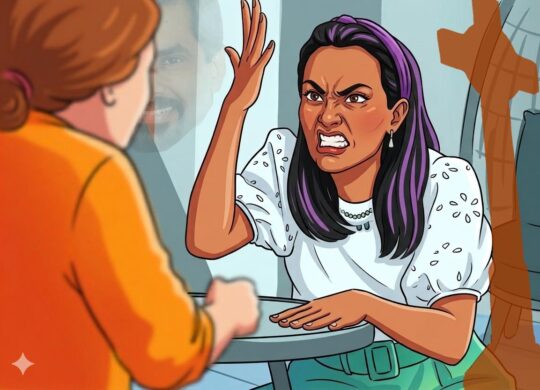
Difficult people in your life? Happens to everybody. But it’s more than just our moods that are affected, apparently. They can age you!
So report sociologists from New York University, University of South Florida, and University of Michigan-Ann Arbor, in Proceedings of the National Academy of Sciences: “Negative Social Ties as Emerging Risk Factors for Accelerated Aging, Inflammation, and Multimorbidity.”
We investigate the role of ‘hasslers,’ people in one’s close social networks who create problems or make life more difficult, finding that these negative ties are not rare, disproportionately experienced by individuals facing greater social and health vulnerabilities, and consequential for aging. Each additional hassler is associated with faster biological aging, with especially pronounced effects when the hassler is a family member. These findings identify negative social ties as chronic stressors that shape aging trajectories.”
How does this happen?
These hasslers may accelerate biological aging by mimicking the harmful effects of traditional chronic stressors, such as financial strain or workplace stress, and contribute to increased inflammation, compromised immune function, and elevated risk for cardiovascular and other diseases.”
Hasslers do a number on you!
The researchers collected data from more than 2,000 individuals in a health survey conducted in Indiana. Participants answered questions about their social relationships during the previous six months. They then answered follow-up questions, including how often that person hassled them, caused problems or generally made their lives more difficult. Participants were also asked to self-rate their overall health.
They also gave saliva samples, which researchers analyzed for DNA changes that signify biological aging, allowing them to compare the aging rates of those who had hasslers in their networks and those who did not.
It was found that for every additional hassler that participants regularly interacted with, their pace of aging increased by 1.5%. In other words, instead of aging one biological year per calendar year, a person with at least one extra hassler would age around 1 year and 6 days during the same time.
Senior author, Dr. Brea Perry:
Even small effects in terms of biological aging can accumulate, and can contribute to earlier onset of chronic disease.”
Of course, this study does not prove cause-and-effect, but there is a correlation.
Again, Dr. Perry:
Women seem to be ‘hassler’-prone than men are. Also individuals who experienced a difficult childhood tend to be more vulnerable to chronic stressors and to negative life events, and so they may be more vulnerable to hassling.”
Avoid hasslers, suggest the authors.
Dr. Perry again:
When you’re around a hassler, limiting the amount of time you spend with that person or considering therapy to improve difficult aspects of the relationship might be worthwhile. I think for me, boundary setting is important. As soon as you recognize that someone who is a hassler has these negative biological consequences for you, set limits on the effort you’re putting into that relationship.”
On the other hand, make sure to create plenty of social buffers by consistently investing in relationships that do provide support: enough non-hasslers in your network or environment calm you down.
But the best buffer?
Yahweh my God, in You I have taken refuge;
save me from all those who pursue me, and rescue me,
Lest, like a lion he rend my soul to pieces,
dismembering [me], while there is none to rescue.
…
O may the evil of the wicked come to an end, but establish the righteous;
for a trier of the hearts and innards is the righteous God
My shield [is] the Most High God,
who delivers the upright in heart.
Psalm 7:1–2, 9–10
SOURCE: Study Finds; PNAS


 Abe Kuruvilla is the Carl E. Bates Professor of Christian Preaching at The Southern Baptist Theological Seminary (Louisville, KY), and a dermatologist in private practice. His passion is to explore, explain, and exemplify preaching.