
aBeLOG
Welcome to the aBeLOG, a series of (hopefully!) fortnightly posts on all matters homiletical. I intend to touch on whatever grabs my attention regarding preaching—issues contemporary and ancient, ideas hermeneutical and rhetorical, personalities conservative and liberal, publications antiquarian and avant-garde. Essentially, I’m going to follow my own homiletical olfactory instincts up rabbit trails and after red herrings. Comments are always invited and appreciated.
Mark: Introduction
After the series of posts for the last few months on the theology of preaching and what authors do with what they say, I am planning to go through the Gospel of Mark, pericope by pericope, here on the aBeLOG. This will essentially be a distillation of what is in my commentary (Mark: A Theological Commentary for Preachers; more on the book here).
Texts and Stained Glass
Biblical authors’ literary products are agenda-driven and discoursed for a purpose, not merely created to convey information. They carefully selected and shaped their material to convey their respective theological agendas (pericopal theology). Think of what authors can do to just one facet of life, time; it is the authors’ prerogative to tweak it any which way they wish: flash forwards, flash backs, summaries, ellipses (gaps in the story), pauses (for explanatory
Naked & Enrobed
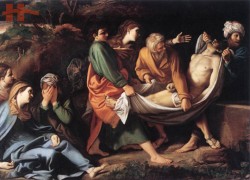
That’s right: Naked & Enrobed!
Yup, that was one of my recent sermons.
Actually, the full title was The Naked Runaway and the Enrobed Reporter!
On one of the most obscure texts of the New Testament.
A young man was following Him,
wearing a linen clothe over [his] nakedness;
and they seized him.
But he abandoned the linen cloth
and fled naked.
Mark 14:51
Well, if you want to know more about this unfortunate gentleman’s wardrobe malfunction, go
Pericopal Theology Distinguished
I have, in previous posts, discussed the entity I label “pericopal theology,” the theology specific to a particular pericope, representing a segment of the plenary world in front of the canonical text that portrays God and his relationship to his people. Pericopal theology is, in my conception, the crucial intermediary in the sermonic move from text to application.
Pericopal theology differs from systematic or biblical theology (at least as they are commonly defined).
The Aqedah (Genesis 22)
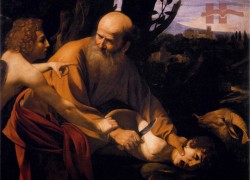
The Aqedah is the term given to the account of the “sacrifice” of Isaac by Abraham. The word is derived from the Hebrew verb ‘qd which means “to bind”—thus referring to the binding of Isaac at the altar of his sacrifice.
Then they came to the place of which God had told him;
and Abraham built the altar there and arranged the wood,
and bound his son Isaac and laid him on the altar, on top of the wood.
Genesis 22:9
The account of Abraham’s trial in Genesis
Pericopal Theology

A couple of months ago, I had written about the importance of the pericope in preaching. (By “pericope” I mean the manageable chunk of the biblical text employed in a sermon—i.e., a preaching text.)
And several weeks ago, I had talked about the world in front of the text, God’s ideal world, segments of which are portrayed by individual
Growing, Pericope by Pericope

It is not often that one gets to see the fruit of one’s ministry labors. But by God’s grace, I got to taste a delicious specimen the other day, in the form of an email from one of my former students, Michael. He always kept pestering me about when my Mark commentary would be done. When it came on the market, Michael was one of the first to buy a copy, and he promptly began teaching through it in his SS class for Young Marrieds at a local church.
Here’s his email (slightly
 Abe Kuruvilla is the Carl E. Bates Professor of Christian Preaching at The Southern Baptist Theological Seminary (Louisville, KY), and a dermatologist in private practice. His passion is to explore, explain, and exemplify preaching.