
aBeLOG
Welcome to the aBeLOG, a series of (hopefully!) fortnightly posts on all matters homiletical. I intend to touch on whatever grabs my attention regarding preaching—issues contemporary and ancient, ideas hermeneutical and rhetorical, personalities conservative and liberal, publications antiquarian and avant-garde. Essentially, I’m going to follow my own homiletical olfactory instincts up rabbit trails and after red herrings. Comments are always invited and appreciated.
Jeffrey Arthurs: How I Preach
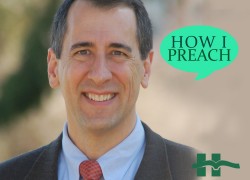
Jeffrey Arthurs: And this is How I Preach …
[Jeff is a good friend, and fellow-homiletician and fellow-member in the Evangelical Homiletics Society. It’s a pleasure to feature him on How I Preach.]
Jeffrey D. Arthurs
Professor of Preaching and Communication
Chair, Division of Practical Theology
Gordon-Conwell Theological Seminary, S. Hamilton, Massachusetts
Current gig (preaching, teaching, etc.) and years at it:
Teaching
Mark 14:53−72

Faithfulness in discipleship involves self-denial for the cause of Jesus, without concern for self-preservation.
But he denied [it] ….
But again he denied [it] ….
But he began to curse and swear ….
Mark 14:68, 70, 71
The “sandwich” structure (Peter in the outside stories, 14:53–54, 66–72; Jesus in the inside, 14:55–65) is a masterpiece of literary creation, especially in this pericope: Jesus and Peter are compared in two separate trials—Peter, too, was
Timothy Warren: How I Preach
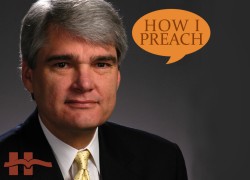
Timothy Warren: And this is How I Preach …
[I am thrilled to present a new series of occasional (once a month?) interviews of those who are considered the movers and shakers in homiletics. How I Preach will feature their answers to questions on a variety of topics, particularly their views and habits of preaching. These answers that should be interesting to all preachers, novices and experts. So here we go with the first installment, and I am proud to present
Mark 14:12−52

Faithfulness in discipleship, emulating Jesus, involves submission to God’s sovereignty, in prayerful dependence upon the Holy Spirit.
“Be alert and pray that you may not come into temptation;
the Spirit is willing, but the flesh is weak.”
Mark 14:37–38
In Mark 13:35, Jesus declared, “Therefore, be on the alert, for you do not know when the lord of the house is coming—whether in the evening or midnight or at cockcrow or early in the morning.” These time stamps—“evening,”
Who Was The Young Man?

Ever wondered who the mysterious guy was, who ran away naked when Jesus was arrested—a cameo found only in Mark, in 14:51−52? Well, today is your lucky day!
Check out this article that ran in the current issue of Dallas Theological Seminary’s award-winning quarterly, Kindred Spirit: “Who Was The Young Man?”
As a bonus, it not only discusses the “Naked Runaway” of Mark 14, but also the “Enrobed Reporter” of Mark 16.
Let me know what you think.
Mark 14:1−11

Accepting the suffering mission of Jesus, disciples make sacrifices that are profuse, pure, precious, and praiseworthy.
“A good deed she has done to Me.”
Mark 14:6
This is another of Mark’s sandwiches, with an outer story (the betrayal of Jesus; 14:1–2, 10–11) and an inner story (the anointing of Jesus; 14:3–9).
Jesus, unlike the religious leaders in Jerusalem, is in Bethany; Indeed, he seems to have deliberately made his way to the house of one banned from the
Mark 13:1−37

Dependence on God’s providence, the Spirit’s power, and the promise of the Son’s return enables the disciple to be faithful to Jesus until his return.
And what I say to you, to all I say, ‘Be alert!’”
Mark 13:37
The theme of this chapter continues Jesus’ anti-Temple stance in Mark 11 and 12. Israel, and particularly its leadership, has failed in its mission to produce fruit (11:12–26; 12:38–40); judgment would be inevitable. All the Temple’s stones were
 Abe Kuruvilla is the Carl E. Bates Professor of Christian Preaching at The Southern Baptist Theological Seminary (Louisville, KY), and a dermatologist in private practice. His passion is to explore, explain, and exemplify preaching.