
Internalization!
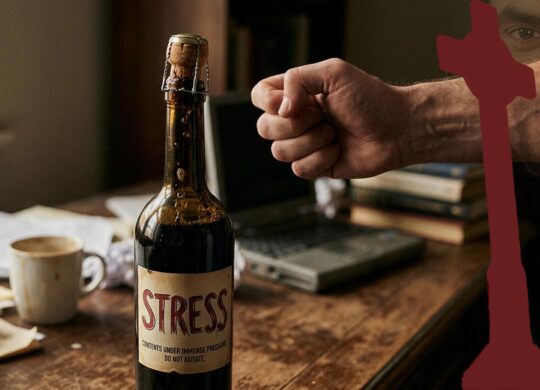
One might think, or have heard others exhort, that keeping a stiff upper lip and not bothering others with one’s troubles is a sign of strength and resilience. One would be wrong, according to “Stress Internalization Is a Top Risk for Age-Associated Cognitive Decline among Older Chinese in the U.S.,” published in The Journal of Prevention of Alzheimer’s Disease, by scientists from Rutgers and the Children’s Hospital of Philadelphia.
The study followed 1,528 Chinese American adults in the Chicago area who were in their seventies on average—part of the Population Study of Chinese Elderly, the largest community-based study of its kind in the United States. Over roughly four years, participants took part in three rounds of memory and thinking tests.
The researchers sought patterns between mental performance and different aspects of life: emotional well-being, social support, health problems, and cultural adaptation. One factor stood out—something they called “stress internalization”—when those who feel a high level of stress and hopelessness, along with a lower sense of control, instead of sharing their frustrations or asking for help, tend to keep it all bottled in.
About 60 percent of the study participants lived in Chicago’s Chinatown, a neighborhood rich in culture, tradition, and community ties. Living in such an environment can be comforting, but it can also reinforce traditional norms that struggles should be handled privately. Roughly 69 percent of Chinese Americans are immigrants, and two-thirds of older Chinese Americans speak little or no English. Many arrived in the United States during midlife and have spent decades navigating a society that subscribes to the “model minority” stereotype. This is the assumption that Asian Americans are naturally successful, hardworking, and self-reliant. While this is often intended as praise, it can also create pressure to downplay struggles, and avoid asking for help—stress internalizing.
Reported Study Finds:
In the study, people with high stress internalization scores experienced memory decline at a faster pace than their peers. Importantly, this effect was seen only in memory-related skills—such as recalling a list of words after a short break—and not in other cognitive abilities like planning, organizing, or problem-solving.”
Surprisingly, having a wide social circle, participating in community activities, or becoming more culturally adapted to American life did not seem to slow the mental decline once it began. That means people who were more socially active or better adapted to life in the U.S. started ahead, but they lost ground at the same rate as others.
Bottom line: resilience isn’t just about pushing through on your own. We need to speak up, share our burdens, and let others help us carry the load.
But most especially, handing them to God!
Cast upon Yahweh your burden and He—He will sustain you;
He will not forever allow the righteous to be shaken.
Psalm 55:22
Blessed be the Lord—day after day He bears our burden, God, our deliverance.
Psalm 68:19
Jesus declared:
“Come to Me, all who are weary and heavy-laden, and I will give you rest.
Take My yoke upon you and learn from Me,
for I am gentle and humble in heart, and you will find rest for your souls.
For My yoke is easy and My burden is light.”
Matthew 11:28–30
Be anxious for nothing, but in everything by prayer and supplication with thanksgiving
let your requests be made known to God.
And the peace of God, which surpasses all comprehension,
will guard your hearts and your minds in Christ Jesus.
Philippians 4:6–7
SOURCES (of ideas, numbers, words, …): Study Finds; Journal of Prevention of Alzheimer’s Disease






 Abe Kuruvilla is the Carl E. Bates Professor of Christian Preaching at The Southern Baptist Theological Seminary (Louisville, KY), and a dermatologist in private practice. His passion is to explore, explain, and exemplify preaching.