
Longevity?
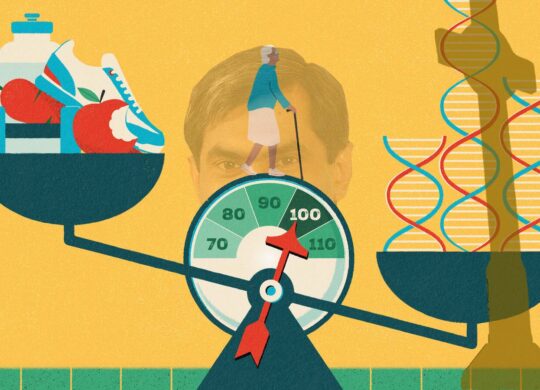
Most of us probably want to live long. What are the factors contributing to longevity? We already know that unhealthy lifestyles can reduce our lifespans: inadequate exercise, imprudent diet, and inadvisable smoking, potentially resulting in heart disease, diabetes, and stroke. What else? How about genes?
Researchers from Israel, Sweden, China, and the Netherlands, decided to take another look at this and published their results in the prestigious journal, Science, the other day:
Current estimates of heritability are low—twin studies show heritability of only 20 to 25%, and recent large pedigree studies suggest it is as low as 6%.”
They realized that these studies confounded “intrinsic” mortality issues (genes, aging, health) with “extrinsic” ones (accidents, violence, etc.).
We use mathematical modeling and analyses of twin cohorts raised together and apart to correct for this factor, revealing that heritability of human life span due to intrinsic mortality is above 50%. Such high heritability is similar to that of most other complex human traits and to life-span heritability in other species.”
I.e., your genes contribute to more than 50% of your living long. So their title: “Heritability of Intrinsic Human Life Span is about 50% when Confounding Factors are Addressed.”
In summary, correcting for extrinsic mortality raises the estimate for the heritability of human life span in twin and sibling studies to ~55%, more than twice previous estimates and in line with heritability of most human traits. Identifying the genetic variants underlying this heritability would help us to understand the fundamental mechanisms of human aging.”
Genes and 50% is all well and good. Nothing we can control.
But the Bible does add a controllable factor that can reduce lifespan: sin!
My son, do not forget my teaching, but let your heart keep my commandments;
For length of days and years of life And peace they will add to you.
Proverbs 3:1
Not following God’s commands can bring trouble, including a diminution of life. You see, there are practical consequences of the behavior of God’s people in this life.
Here’s another, this from the New Testament (citing the Old):
Children, obey your parents in the Lord, for this is right.
Honor your father and mother … so that it may be well with you,
and that you may live long on the earth.
Ephesians 6:1–3
To the verses cited above, one can add the numerous utterances in Proverbs that promise life by eschewing violence (Prov 1:19), avoiding naiveté (1:32; 10:21; 14:12; 21:16), obeying God (Prov 3:1–2; 4:10), being wise (Prov 3:16; 9:11; 13:14; 15:24), resisting adultery (Prov 5:5, 23; 7:27; 9:18), fearing God (Prov 10:27; 14:27; 19:23: 22:4), displaying righteousness (Prov 11:4, 19, 30; 16:17; 19:16: 21:21), refusing wickedness (Prov 12:7; 15:27; 22:22–23), speaking guardedly (Prov 13:3; 21:6), as well as honoring parents (Prov 20:20; 30:17).
The general tendency of Bible scholars is to consign all of these to the category of sententious moralisms that are “not necessarily true all the time.” I, however, would affirm that they are always true. There are many factors that contribute to a long lifespan, including genes (50%!), and exercise, and diet, and abstaining from smoking, and good healthcare, etc., etc. Well, God adds another to that list: righteousness or godly living.
While I will not venture to say by how many nanoseconds, milliseconds, minutes, hours, days, weeks, months, or decades godliness will extend lives, I would maintain that righteousness does prolong life, by some amount. (The contrary is true as well: sin reduces lifespan.) So, unlike others, I remain convinced that what the Bible says about lifespans is always true … all other factors remaining equal.
Live godly, live long!
SOURCE: Science


 Abe Kuruvilla is the Carl E. Bates Professor of Christian Preaching at The Southern Baptist Theological Seminary (Louisville, KY), and a dermatologist in private practice. His passion is to explore, explain, and exemplify preaching.