
Shared?
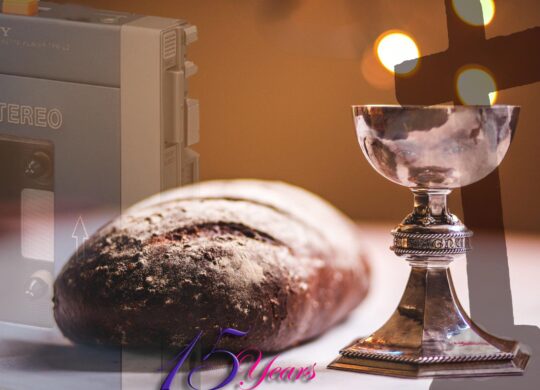
You thought social distancing began in March with COVID-19?
Nope. It began 40 years ago. When a new, electronic, manmade “virus” burst on the scene. From Japan. Called … The Walkman!
It arrived in the USA in June of 1980. Socialization would never the be same again.
In fact, Matt Alt, in a recent article in The New Yorker, called the Walkman “the gadget that taught the world to socially distance.”
Until 1980, music was a communal experience: concertgoers in silent halls, families around huge stereos, teens blasting their transistors, bars twinkling with their juke boxes, breakdancing with a boom box.
After 1980, it was everyone for oneself. Each cocooned in his or her own soundscape. You and your music—in your bedroom, on the train, through the street.
Akio Morita, Sony’s Chairman, smart as he was, actually worried about the isolation factor of his company’s new device. He was mistaken: isolation was what made the device popular.
Said Susan Blond, a VP at CBS Records, in 1981:
With the advent of the Sony Walkman came the end of meeting people. It’s like a drug: You put the Walkman on and you blot out the rest of the world.”
Social distancing had arrived!
Though they didn’t call it that. In 1984, musicologist and professor Shuhei Hosokawa of the International Research Center for Japanese Studies called it “The Walkman Effect” in an article of the same name in Popular Music.
Wrote Matt Alt:
Wearing headphones functioned both as a personal ‘Do Not Disturb’ sign and an alternate soundtrack to the cacophony of the city. This was a new form of human experience, engaged disengagement, a technological shield from the world and an antidote to ennui. Whenever nerves frayed or boredom crept in, one could just hit Play and fast-forward life a little.”
Then came Steve Jobs. He was gifted a Walkman by Morita that he dissected out carefully. It took two decades, but then, in 2001—the iPod.
Exclaimed Jobs to Newsweek a few years later:
I was on Madison Avenue, and it was, like, on every block, there was someone with white headphones, and I thought, ‘Oh, my God, it’s starting to happen.’”
It already had. And it has never stopped. And here we are.
Matt Alt concluded:
The Walkman wasn’t the end of meeting people, but it paved the way for surviving an unthinkable era in which we would find ourselves unable to meet at all.”
Wrote Robert Schönhammer in 1989 in Phenomenology + Pedagogy:
People with earphones seem to violate an unwritten law of interpersonal reciprocity: the certainty of common sensual presence in shared situations.”
Shared situations. Common sensual presence.
We miss that most in worship, though we’re doing our best. In fact, even in partaking (= sharing!) the Lord’s Supper, there is something about drinking from the same cup and sharing the same loaf.
Jesus took bread, and after a blessing,
He broke and gave to the disciples, and said,
“Take, eat; this is My body.”
And when He had taken a cup and given thanks,
He gave it to them, saying,
“Drink from it, all of you;
for this is My blood of the covenant,
which is poured out for many for forgiveness of sins.”
Matthew 26:26–28
What have we lost? And what more will we lose?
Oh, well, Time to go for a walk in the park, headphones and iPhone and all.
SOURCES:
The New Yorker; Phenomenology + Pedagogy; Popular Music
 Abe Kuruvilla is the Carl E. Bates Professor of Christian Preaching at The Southern Baptist Theological Seminary (Louisville, KY), and a dermatologist in private practice. His passion is to explore, explain, and exemplify preaching.
1 Comment
Inevitability dividing and isolating with self taking control through device and content choices with no/little regard for relational loss.
Which is a massive loss.