
Autopilot!
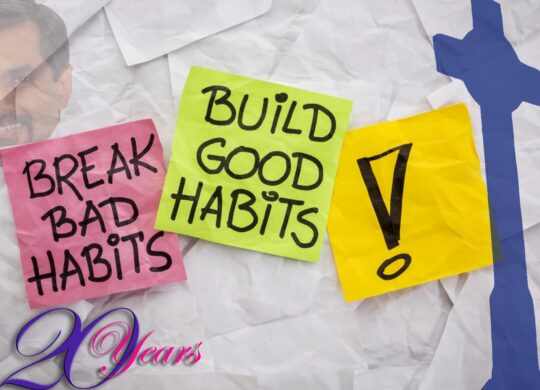
You wake up, brush your teeth, make coffee, check your phone, tend to your kids, perform your ablutions, eat your cereal, drive to work, …. How much of that morning routine did you actually think about? According to new research, the answer is … almost none of it.
So claim scientists from University of South Carolina, SC, Central Queensland University, Rockhampton, Australia, and University of Surrey, Guildford, UK, in “How Habitual is Everyday Life? An Ecological Momentary Assessment Study,” published recently in Psychology & Health.
Lead researcher Prof. Amanda Rebar:
The study distinguished between two types of automatic behavior. Habitual instigation occurs when environmental cues automatically trigger the decision to do something, like reaching for your phone when you hear a notification. Habitual execution happens when you perform an action smoothly without thinking about the mechanics, such as brushing your teeth or driving a familiar route.”
These folks tracked 105 people for a week, examining over 3,700 individual behavioral moments across employment, domestic tasks, screen time, eating, transportation, and leisure activities. They discovered something remarkable about human behavior: almost nine out of every ten daily actions happen automatically, without conscious thought, “autopilot.”
88% of daily behaviors were “habitually executed,” i.e., people performed them with minimal conscious oversight. 65% of behaviors were “habitually instigated,” i.e., actions were triggered automatically by environmental cues rather than by deliberate decision-making.
Prof. Rebar explained:
People like to think of themselves as rational decision makers, who think carefully about what to do before they do it. However, much of our repetitive behavior is undertaken with minimal forethought and is instead generated automatically, by habit.”
Interestingly enough, personal characteristics like age, gender, and marital status had no bearing on how automatically people behaved. Neither was there any meaningful difference in habituation across demographic groups.
All this might turn out to be helpful:
Establishing to what extent everyday behaviors are habitual will help intervention developers understand whether and which specific behaviors can become habitual or may require habit disruption to enable adoption of desired behaviors.”
Intervention for breaking bad habits and building new ones, in other words.
The authors conclude:
Interventions can realistically seek to promote habit formation for any action. We recommend that behavior change programs incorporate strategies to encourage habit formation for new, wanted behaviors, while seeking to disrupt unwanted habits that may undermine change.”
Now there’s a biblical idea!
In what [manner] can a young person maintain his path pure?
By keeping [it] according to Your word.
With all my heart I have sought You; let me not stray from Your commandments.
In my heart I have treasured Your utterance in order that I may not sin against You.
Blessed are You, Yahweh; make me learn Your statutes.
With my lips I have recounted all the judgments of Your mouth.
In the way of Your decrees I have exulted, as [being] over all wealth.
Upon Your precepts I will muse and I will regard Your paths.
In Your statutes I will be delighted; I will not forget Your word.
Psalm 119:9–16
The constant and joyful focus upon the word of God, including its recounting and its meditation—habituation!—is the means by which lives are kept pure, as God, through his word, graciously instructs his people and keeps them from sin.
That’s a good habit!
[And, I might add, particularly helpful for preachers who are in the business of furthering life-change, for themselves and their listeners, in the form of concrete application in sermons. We need to provide an immediately actionable step—a start to accomplishing the call of the preached text.]
SOURCE: Study Finds; Psychology & Health


 Abe Kuruvilla is the Carl E. Bates Professor of Christian Preaching at The Southern Baptist Theological Seminary (Louisville, KY), and a dermatologist in private practice. His passion is to explore, explain, and exemplify preaching.