
Gut!
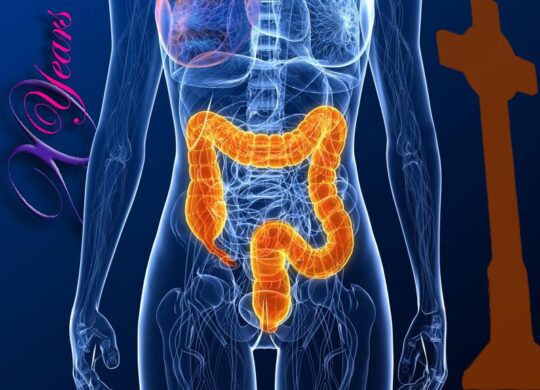
You thought it was only touch, taste, sight, smell, and hearing? I did, too. Apart from the other less-than-classical position sense and, of course, the “sixth” sense—whatever that is. Well, we may just have to call that the “seventh” sense, because … a real, physiological, organic sixth sense seems to have been discovered. That’s according to scientists collaborating across a variety of institutions in Durham, Cambridge (MA), Philadelphia, and Mexico City. They reported their findings in “A Gut Sense for a Microbial Pattern Regulates Feeding,” published recently in the prestigious journal Nature.
There is, apparently, a new “neurobiotic” sense in the colon (of all places) that detects bacterial signals by employing specialized cells that respond to a bacterial protein. The response is the rapid release of a hormone that activates the vagus nerve (one of the main nerves of the autonomic nervous system, and the longest in the body according to some). This nerve then tells the brain to quit eating!
Said the researchers:
To coexist with its resident microorganisms, the host must have a sense to adjust its behavior in response to them.”
The key protein being sensed by these colon cells is flagellin, that forms the whip-like tails (flagella) that most bacteria use to get around. Flagellin causes the release of PYY hormone from those sensor cells that activates vagus nerve fibers. The rest is history.
When flagellin binds to TLR5 on these gut cells, it triggers the release of PYY hormone, which then activates nearby vagus nerve fibers. The vagus nerve acts like a biological highway, carrying signals from the gut directly to the brainstem in seconds. Instead of acting on nerves directly, flagellin stimulates these specialized gut cells, which then reduce feeding through this newly discovered gut-brain circuit.
Mice lacking this sensing system—mice specifically modified with this defect—ate more food and gained more weight, for they lacked a STOP sign for their consumption. While it is an extrapolation to human conditions, this might explain why disruptions in gut bacteria are linked to obesity and eating disorders in humans.
Researchers also discovered that flagellin levels naturally increase in the colon after eating, showing the system provides real-time feedback about bacterial activity during digestion to help limit further food intake. Sounds like a cooperative venture between bugs and us, to create a gut-brain axis!
One report stated:
People vary dramatically in their gut bacterial compositions, and these findings show that some individuals might have more or less sensitive bacterial sensing systems. Such differences could help explain why some people naturally regulate their weight while others struggle with overeating.”
Current weight loss medications often target brain chemistry or slow digestion, but these findings could create a completely different approach: manipulating the gut’s bacterial sensing system. Future treatments might focus on enhancing the natural communication between gut microbes and appetite control centers in the brain.
The Bible already knew a thing or two about the “innards”!
In fact, God made them!
For You—You formed my innards;
You wove me in my mother’s womb.
Psalm 139:13
When he was unwise, he suffered in his “innards”:
When my heart was embittered,
and [in] my innards I was pierced,
then I was senseless and unknowing ….
Psalm 73:21–22
And his “innards” pointed him to the straight and narrow.
I will bless Yahweh who has counseled me;
yes, by night my innards correct me.
I have set Yahweh before me continually;
because [He is] at my right hand, I will not be shaken.
Psalm 16:7–8
Sensible organs, those innards, I must say!








 Abe Kuruvilla is the Carl E. Bates Professor of Christian Preaching at The Southern Baptist Theological Seminary (Louisville, KY), and a dermatologist in private practice. His passion is to explore, explain, and exemplify preaching.