
Deaf?
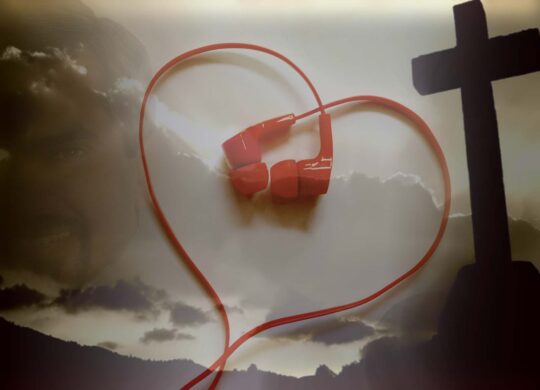
Our ears are connected to our hearts? Maybe, say scientists from Southern Medical University, Guangzhou, Guangdong (China) in “Hearing Impairment, Psychological Distress, and Incident Heart Failure,” published in Heart recently.
Hearing loss raises the risk of heart failure by nearly a third, they assert. Apparently vascular problems may be affecting both ear and heart:
The rich distribution of capillaries in the cochlea and the high metabolic demand of the inner ear may render these regions more sensitive to systemic vascular disorders rather than just local circulatory issues. Therefore, hearing impairment may reflect vascular health and serve as an early and sensitive predictor of cardiovascular disease.”
There is also the social stress of hearing loss that can cause trouble for the heart.
Dr Xianhui Qin, main author, explained:
People with hearing impairment are more likely to experience social isolation, psychological distress, anxiety and depression than people without hearing impairment. These psychological factors may increase the activity of the sympathetic nervous system and the hypothalamic-pituitary adrenal axis, and enhance inflammation and oxidative stress, thereby accelerating atherosclerosis, increasing peripheral stress, and promoting the development of cardiac remodeling.”
All of this from mining the data of 164,000 participants from the UK Biobank (a long-running research project on the health of Britons), more than 4,000 of them wearing hearing aids. None had heart problems to start with, but during the 11-year follow-up period, around 3% were diagnosed with a heart condition. Those who struggled to hear a bit had a 15% increased risk of heart failure, while those with real poor hearing had a 28% higher chance.
(Not just our hearts, but our brains, too, it seems: a few years ago, the Lancet Commission on Dementia estimated that hearing loss contributes to around 8% of dementia cases worldwide. In this case damage to nerve cells involved in hearing cause dysfunction of other nerves in the brain they interact with, creating a cascade that results in mental decline.)
The paper also notes:
Both the participants who used hearing aids and those with poor hearing had a similarly significant (26%) increase in the risk of heart failure, suggesting that while hearing aids can improve auditory function, they may not address the underlying vascular issues that contribute to the risk of (heart failure).”
Hearing loss is increasingly common, particularly as people age, while the prevalence of heart failure is also on the rise, affecting around 64 million people worldwide, noted the researchers.
Of course, this is an observational study, and as such, can’t establish cause and effect, but still ….
And another twist: If God does not hear us, our hearts will go into failure!
When I call, answer me, God of my righteousness.
In [my] distress, relieve me; be gracious to me and hear my prayer. …
You have put joy in my heart ….
In peace I will both lie down and sleep, for You alone [are] Yahweh.
Psalm 4:1, 7–8
The desire of the afflicted You have heard, Yahweh;
You establish their heart, You attend [with] Your ear.
Psalm 10:17
For He has not despised, and He has not detested, the affliction of the afflicted;
… but when he cried to Him for help, He heard. …
The afflicted will eat and be satisfied ….
May your heart live for always.
Psalm 22:24, 26
Thankfully God does hear … and our hearts are safe!
Blessed be Yahweh, because He hears the voice of my supplications [for grace].
Yahweh is my strength and my shield; in Him my heart trusts, and I am helped.
So my heart exults.
Psalm 28:6–7
SOURCE: The Telegraph; Heart




 Abe Kuruvilla is the Carl E. Bates Professor of Christian Preaching at The Southern Baptist Theological Seminary (Louisville, KY), and a dermatologist in private practice. His passion is to explore, explain, and exemplify preaching.