
Do?
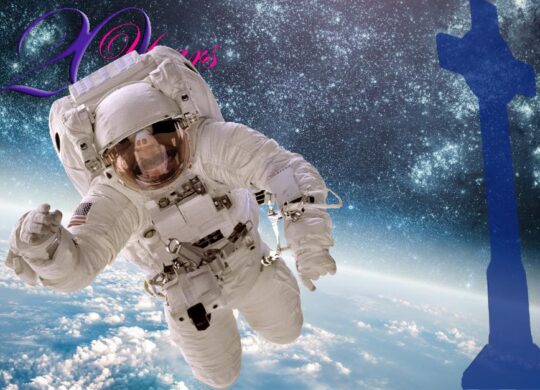
A Space-Out … competition? Yes, it is a thing. And it involves being spaced-out for 90 minutes, all of 5,400 seconds! No sleeping, no noise, no checking phones, no eating, no nothing! Just being spaced-out!
The current champion, Denis Kwan Hong-Wang, wrote about his experience in The Guardian the other day:
From an early age I worried if I was doing enough. That brought a lot of anxiety. I started to practice mindfulness in 2012. It helps a lot with my emotions, and I can think more clearly. As an educational psychologist, I see lots of mental health issues. I think bringing mindfulness into our schools is an important way to find moments of calm, especially in the fast-paced city of Hong Kong.”
So he entered the competition last October, one of a 100 participants who were guided through a series of stretches before the clock was started. After the time was up, the final 10 participants were voted for by the spectators. The finalists’ heart rates were measured throughout , and the one (of the 10) who had the steadiest rhythm became the winner.
When the time was up and the competition was officially over, this guy actually wanted to sit for longer. He explained:
I have a busy life—alongside my job, I am studying, and have two kids, aged 11 and 9. So having this space was a luxury. Often we can get through a day and our mind might not have settled for even a second. I understand that, for many people, sitting in silence for 90 minutes would be a nightmare, but I found it very enjoyable.”
There may be some truth to all this.
Blessing [upon] the person
who has not walked by the advice of the wicked,
οr in the path of sinners stood,
nor in the seat of scoffers sat.
But, instead, in the law of Yahweh [is] his delight,
and in His law he meditates day and night.
And he is like a tree
transplanted by canals of water,
which its fruit—it yields in its season,
and its foliage—it does not wither;
and [in] all he does, he succeeds.
Psalm 1:1–3
The three verbs applied to the wicked ones—walking, standing, and sitting (1:1)—depict them as being constantly on the move, active and dynamic. Doing!
On the other hand, the righteous one does not even get a verb until the end of 1:2, and then this person is simply “meditating,” relatively static, compared to the perpetually perambulating profane person. Subsequently, in 1:3, the participle “transplant” is employed of the righteous, denoting the very opposite of active movement: this “tree” is docked and moored and anchored to a water supply. And thereby, the righteous becomes fruitful and successful—fertile!—for this is the doing that matters: meditating upon Yahweh’s instruction for life (and consequently following it).
Not so the wicked;
instead, [they are] like chaff which is blown away [by] wind.
Therefore the wicked will not rise up in the judgment,
nor sinners in the assembly of the righteous.
For Yahweh knows the path of the righteous,
but the path of the wicked perishes.
Psalm 1:4–6
Finally, we again see the wicked and their perpetual doings in 1:4, but this time suffering a punitive outcome: they are unstable, scattered, and susceptible to the caprices of the wind—worthless husks, merely the sterile object of another agent that blows them away. They can’t rise (1:5a), and finally they perish (1:6b). Impotent kinesis vs. fruitful stasis.
Yup, I gotta go and do … nothing!
SOURCE: The Guardian


 Abe Kuruvilla is the Carl E. Bates Professor of Christian Preaching at The Southern Baptist Theological Seminary (Louisville, KY), and a dermatologist in private practice. His passion is to explore, explain, and exemplify preaching.