
Everywhere?
Several months ago, 11mark, a marketing and advertising agency, put out the results of a study of people’s cell phone habits.
The study was labeled “IT in the Toilet.” It went where no other surveys cared to go to assess the “bathroom benchmark” for cell-phone usage.
Apparently 75% of Americans don’t go to the bathroom alone—they take their mobile devices along for company: 91% of those between 28 and 35 years of age. And even 47% of those 65 and older have
Lei!
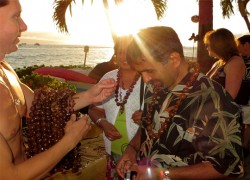
In Maui, where we were last month, we attended a luau (lū‘au), a traditional Hawaiian feast accompanied by obligatory dances and music.
As we entered into the complex where the luau was to be conducted, each of the guests was garlanded with a lei. A Hawaiian proverb says it well: E lei no au i ko aloha (“I will wear your love as a wreath/adornment”). That’s what the lei is, a wreath, given in a traditional welcome.
All kinds of materials may be utilized for this
Sunrise!
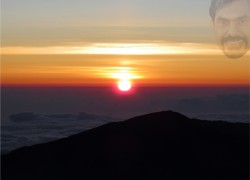
The mountain on West Maui is called Haleakalā (“house of the sun”) with its tallest peak at about 10,000 feet. And it’s a great place to catch the sunrise—a must-do activity in Maui.
From where we stayed, in South Maui, it was a three-hour drive to the summit, mostly hairpin bends that really are hair-raising. Lots of blind turns and steep drop-offs. With the occasional cow meandering across the road.
Not to mention, a ton of bikers on the return trip, going down.
Preaching is Applicational

That preaching is applicational means that preaching is not simply informational. Rather it is transformational, intended to change the lives of God’s people for the glory of God. It is not enough that people know. They must be. That is the goal of preaching. Preaching, therefore, has to be application-oriented.
All the people went away to eat, to drink, to send portions and to celebrate a great festival, because they understood the words
Tree!
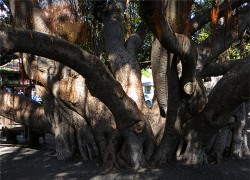
My father, brother and sister-in-law, and I had the delight of visiting one of the prettiest places on the planet last month, Maui, all of us celebrating milestone birthdays and anniversaries.
We hung around and shopped and ate quite a bit in West Maui, in Lahaina. Lā hainā, in Hawaiian, means “cruel sun.”
Maybe it was because of the “cruel sun” that William Owen Smith (1848–1929), a lawyer from a family of American missionaries, planted a banyan tree on April
Moving!
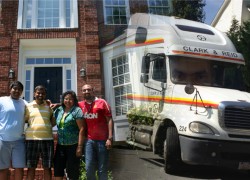
Another moving story (in more ways than one!).
After thirteen or so years, my brother’s job is moving him from South Carolina. Finally, they’ve come to their senses and decided to relocate to Texas.
Moves are tough.
(As a single person who has had to sever his closest ties with each move—and I’ve made a few myself—I can vouch for that. Moves are tough, indeed.)
Yup, moves are tough. No, you don’t lose your friends. No, it’s not that you will never ever go back
Preaching is Theological

Nehemiah’s narrative describes the assembly of God’s people who had returned from exile; in the assembly the word of God was read and made clear so that they might renew their covenant with their God. In previous blogs I’ve noted how this paradigmatic gathering undergirds many of our assumptions about preaching. Here’s another implication of Nehemiah’s account: preaching is a theological activity of a special kind.
All the people
 Abe Kuruvilla is the Carl E. Bates Professor of Christian Preaching at The Southern Baptist Theological Seminary (Louisville, KY), and a dermatologist in private practice. His passion is to explore, explain, and exemplify preaching.