
Super!

Hollywood did pretty well at the US box office till July 2017, shoveling in about $6 billion. But things have not looked that good since. Receipts went down 7.7% between May and the end of June, another summer slump, like the one of last year.
Declared one media analyst, Paul Dergarabedian:
We’re down—but versus a summer of 2016 that was not exactly impressive in terms of the number of sequels that failed.”
So that means this year, things are really down. Disappointments
Beauty?
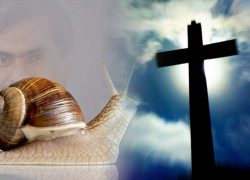
All kinds of stuff is applied to one’s face these days. In an attempt to make oneself beautiful.
Even snail slime. Yup, you read that right. Snail slime. As long as you can overcome the “ickiness” of it, you, too, ostensibly, can look beautiful.
This is part of a whole category of K-beauty products. (The “K” standing for “Korean.”)
Sarah Chung, head of Landing International Inc., that partners with Ulta’s Korean collection said:
People used to talk about French
Eternal?

Some life forms are indestructible, they say.
David Sloan, Rafael Batista, and Abraham Loeb, from the University of Oxford and Harvard, said so in “The Resilience of Life to Astrophysical Events,” a scientific report recently published in the respected journal Nature.
They concluded:
Events which could lead to life being completely eradicated are rare.”
Because those tardigrades will have survived even those disasters!
Also known as “water bears,” these tiny things
Time?

On the busy street of Kalverstraat in Amsterdam, during a recent jaunt, I spotted a church tucked away in the midst of overstuffed storefronts and houses: The Church of Peter and Paul.
This entity, a Roman Catholic church, is also called “De Papegaai”—The Parrot. In the days of the Reformation when Amsterdam, indeed all of the Netherlands, turned to Protestantism, Catholicism could not be flaunted. All Catholic churches had to hide in the background, taking over houses,
Analgesia!
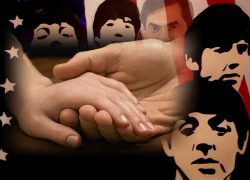
Pavel Goldstein, a postdoctoral researcher at the University of Colorado Boulder, was witnessing the birth of his daughter four years ago.
My wife was in pain, and all I could think was, ‘What can I do to help her?’ I reached for her hand and it seemed to help. I wanted to test it out in the lab: Can one really decrease pain with touch, and if so, how?”
Goldstein and his team in the Cognitive and Affective Neuroscience Lab undertook the challenge. And the results
 Abe Kuruvilla is the Carl E. Bates Professor of Christian Preaching at The Southern Baptist Theological Seminary (Louisville, KY), and a dermatologist in private practice. His passion is to explore, explain, and exemplify preaching.