
Arms!
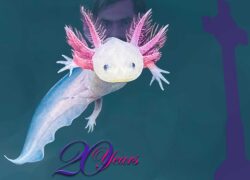
There are about a million of these in captivity—in homes as pets, and in labs as scientific subjects: axolotls. A member of the salamander family that is “pedomorphic,” i.e., in the form of a juvenile.
Most amphibians begin their lives as aquatic animals which are unable to live on dry land, till they undergo metamorphosis to reach adulthood, losing their gills and starting to live on land. Our specimen, the axolotl, lacks some of the hormones that stimulate metamorphosis,
Bones!
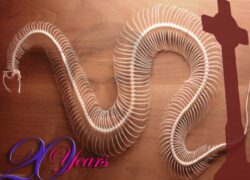
Burmese pythons, giant snakes that can get up to 18 feet long in ye olde state of Florida, and can eat prey almost that size, have been known for another stunning digestive fact: lots of bones go in at one end of the reptile, but no bones ever come out.
We now know why, or so claimeth scientists from France and the USA in “Diet-Dependent Production of Calcium- and Phosphorus-Rich ‘Spheroids’ along the Intestine of Burmese Pythons: Identification of a New Cell Type?”
Distance!

Our thumbs keep those tiny screens moving up and moving down, sometimes sideways to the right and sometimes sideways to the left. Up. Down. Left. Right.
Did you ever wonder how much your fingers move on your phone? Wonder no more. A recent study sponsored by Tollfree Forwarding (a service that does just that) reported on what they had found.
With the average American spending 6 hours and 35 minutes a day on screens, adding up to 2,403 hours annually. It’s no surprise that
Calf?
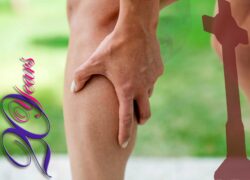
Yup, your calf. Measure the calf diameter. It predicts how long you will live. Bring out the tape measure.
Muscle decline, sarcopenia, increases after your pass the Big 6 Oh—it affects 10–15% of the elderly worldwide. And that creates problems: decreased mobility, greater chances of falling, all adding to the general morbidity that accelerates one’s decline to death.
Several studies have found evidence that suggests a person’s calf size relative to the rest of
Tough Question: Imprecate?
Here’s another “Answer to a Tough Question” that I did for The Southern Baptist Theological Seminary recently: What do Christians do today with the imprecations of the Psalter?
[And for more details, go to the Introduction in the first volume of my commentary on the Psalms: Psalms 1–44 here.]
Gut!
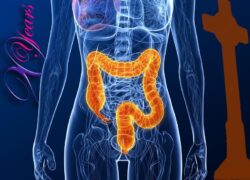
You thought it was only touch, taste, sight, smell, and hearing? I did, too. Apart from the other less-than-classical position sense and, of course, the “sixth” sense—whatever that is. Well, we may just have to call that the “seventh” sense, because … a real, physiological, organic sixth sense seems to have been discovered. That’s according to scientists collaborating across a variety of institutions in Durham, Cambridge (MA), Philadelphia, and Mexico City.
 Abe Kuruvilla is the Carl E. Bates Professor of Christian Preaching at The Southern Baptist Theological Seminary (Louisville, KY), and a dermatologist in private practice. His passion is to explore, explain, and exemplify preaching.