
Red!
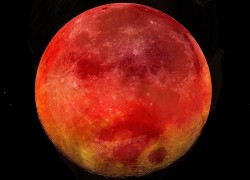
Couple of weeks ago, I woke up early. 2:08 am to be exact. To see the “Blood Moon.”
(If you missed, don’t worry. That’s why Al Gore invented the Internet!)
If you want to really see another one, you’re in luck. There are three more on the way: October 8, this year, and then April 4 and September 28, in 2015.
Unusual. This is called a tetrad. Four successive total lunar eclipses, with no partial eclipses in between, and each separated from its neighbors
Mine!
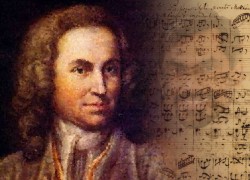
My third and last installment of a few amateur reflections on the text and score of St. Matthew Passion by the venerable J. S. Bach (1685–1750).
This guy really is doing something with what he has composed. So there is real merit (and marvelous fruit) in not only just listening to the work, but also looking at it closely.
So also for all texts. Particularly, the Bible. The text, rather than being a plain-glass window, is actually a stained-glass window.
Stuart Briscoe: How I Preach
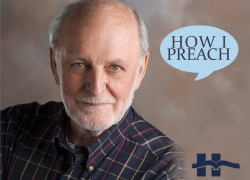
Stuart Briscoe: And this is How I Preach …
[Stuart and I shared a pulpit a few months ago at Moody Bible Institute’s Founder’s Week in Chicago. There, I persuaded him to let us in on his preaching techniques and schemes. The man has been preaching for almost seven decades. And he’s still going strong, teaching the Bible across oceans and on every continent, after having pastored Elmbrook Church, in Brookfield, Wisconsin, the largest church in that state, for thirty
Cross!
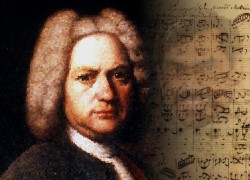
Last week, as I had mentioned in my last post, the Dallas Bach Society performed the St. Matthew Passion by ye olde Johann Sebastian Bach (1685–1750).
My passion (crusade?) is to pay close attention to biblical texts, to figure out what authors do with what they say. They not only say things, but they are doing something in/with their saying. They are accomplishing something. A divine demand is being made in every text. And to that, we readers are expected
Son!
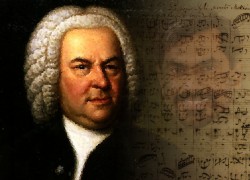
Last night, I had a wonderful opportunity to listen again to a live performance of THE St. Matthew Passion, courtesy of the Dallas Bach Society.
A remarkable sacred oratorio written by Johann Sebastian Bach (1685–1750), probably around 1727. There are both solos and pieces for double choir (two four-part choirs). The Passion also employs a double orchestra—two sets of instrumentalists, each set having two recorders, two flutes, two oboes, two violins, a viola,
A New Commentary!
This is a rehash of an old post, to announce my new commentary that’s just come out: Genesis: A Theological Commentary for Preachers.
I’m frequently asked by my students about commentaries I employ in my preaching prep.
The Preacher sought to find delightful words and to write words of truth correctly. The words of wise men are like goads, and masters of these collections are like well-driven nails; they are given by one Shepherd. But
 Abe Kuruvilla is the Carl E. Bates Professor of Christian Preaching at The Southern Baptist Theological Seminary (Louisville, KY), and a dermatologist in private practice. His passion is to explore, explain, and exemplify preaching.