
Taste?
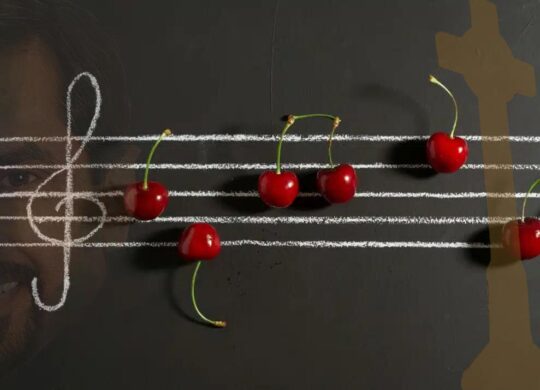
Music and taste? Connected? Yup. So declared scientists from Aarhus University and The Royal Academy of Music, Aarhus, Denmark, and from University of Copenhagen, in “Music–Taste Interactions Enhance Gustatory and Sensorimotor Brain Activity,” published in Scientific Reports recently.
Eating is one of the most fundamental multisensory experiences, yet the neural mechanisms that integrate auditory and gustatory inputs in humans remain underexplored. This study examined how music influences the brain’s encoding of taste.”
Music playing while food hits the tongue makes the brain respond more strongly to taste, they say. In fact, music by itself, with no food involved, also activated some of the same brain regions that process taste.
It was a small study of 28 adults, brain-scanned after simple sugar and sour drinks (that let researchers watch what the brain itself was doing), but still ….
First author, Dr. Alberte Seeberg:
With brain scans, we gain a biological window into what happens when the senses interact.”
Inside the MRI machine, a small tube dripped a sweet sugar solution or a sour citric acid solution onto each volunteer’s tongue. Scanner-safe headphones played one of two soundtracks. The sweet sound used high pitches, smooth notes, and pleasant harmony. The sour sound kept the high pitches but added sharper notes and mildly clashing harmony. Appropriate matches of food and music were studied (vs. food and silence).
Sweet and sour tastes, and the soundtracks built to match them, lit up overlapping parts of the brain, meaning some of the same areas responded to both. In other words, adding music raised activity in taste and mouth-sensation regions for both flavors, compared with tasting the same liquid alone.
Dr. Seeberg:
We see uses in restaurants, cafeterias, and hospitals. And for people who are at risk of malnutrition, something as simple as music could potentially improve the eating experience.”
The Psalms got it right!
Taste and see that Yahweh is good;
blessing [upon] the one who takes refuge in Him.
Psalm 34:8
Good taste and knowledge—do make me learn,
for on Your commandments I have believed.
Psalm 119:66
And correspondingly, the Psalter is replete with the people of God making music to him.
I will give thanks to Yahweh for His righteousness,
and will make music to the name of Yahweh Most High.
Psalm 7:17
Make music to Yahweh, His devout ones,
and give thanks to His holy memory.
Psalm 30:4
Make music to God, make music;
make music to our King, make music.
For King of all the earth is God;
make music with understanding.
He reigns—God—over the nations;
God, He sat on His holy throne.
Psalm 47:6–8
My strength, to You I will make music;
for God is my stronghold, the God of my lovingkindness.
Psalm 59:17
All the earth will worship You,
and will make music to You;
they will make music to Your name.
Psalm 66:4
Kingdoms of the earth, sing to God,
make music to the Lord.
Psalm 68:32
Good it is, to give thanks to Yahweh,
and to make music to Your name, Most High,
to proclaim in the morning Your lovingkindness,
and Your faithfulness in the nights,
with ten[-stringed instrument] and with harp,
with playing on the lyre.
Psalm 92:12–3
Calvin, of course, wasn’t buying it.
Now that Christ has appeared and the Church has reached full age, [to engage in instrumental music] were only to bury the light of the Gospel, should we introduce the shadows of a departed dispensation … terminated with the Gospel.”
Needless to say, the good man was utterly wrong—he had … poor taste!
Taste God best! Make good music!
SOURCES (of ideas, numbers, and words): Study Finds; Scientific Reports
 Abe Kuruvilla is the Carl E. Bates Professor of Christian Preaching at The Southern Baptist Theological Seminary (Louisville, KY), and a dermatologist in private practice. His passion is to explore, explain, and exemplify preaching.